How to Obtain a Nepal Visa
You can obtain a Nepal visa on arrival at Kathmandu’s Tribhuvan International Airport. Online visa applications are also available. You can apply through the official online visa service by visiting this link: Nepal Spirit Nepal Visa Form.
If you are entering Nepal overland from India or China, you can obtain your Nepal visa at the border immigration checkpoints.
On-Arrival Visa Fees at Entry Points
Is Accommodation Included in Kathmandu and During the Trekking Period?
We provide 3-star tourist-standard hotels in Kathmandu on a twin-sharing basis with breakfast included. If you are trekking or climbing in a group, you will share a room with someone of the same gender from your group.
If you prefer a single room in Kathmandu or during the trek, you can request a single room supplement at an additional cost beyond the stated trip price. We can also help you book accommodation in luxury hotels upon request. For more details, please feel free to contact us.
Is Airport Pickup and Drop-Off Included?
Yes, airport pickup and drop-off are included. We ensure your arrival and departure are handled smoothly with private vehicle services suited to your group size.
What Climbing Equipment Is Required for Lobuche Peak?
Based on decades of experience, we recommend the following climbing equipment for Lobuche Peak:
- Plastic boots (1 pair)
- Crampons (1 pair)
- Ice axe (1)
- Harness (1)
- Carabiners (2)
- Snow gaiters (1 pair)
- Snow and sun glasses (1 each)
- Warm gloves (1 pair)
- Windproof jacket and trousers (1 set each)
- Down jacket (1)
- Down sleeping bag with inner liner (1)
- Main ropes – 200m total (50m per person, depending on peak)
- Snow bars – 2 to 4 pieces, depending on group size
- Ski poles (optional)
What Kind of Accommodation Is Provided During the Trek and Climbing Period?
We provide accommodation in tea houses (mountain lodges), which serve as a combination of guest houses, restaurants, and social hangouts. Rooms typically have twin beds and minimal furniture such as small tables or chairs.
Blankets are generally provided, but we recommend carrying your own sleeping bag. Most bathrooms are shared, with either squat (Asian) or Western-style toilets. Hot water for showers is usually available at an extra charge.
During the Lobuche Peak climb, we provide high-quality tents and necessary kitchen tents.
What Food Can We Expect During the Trip?
Full board meals (breakfast, lunch, and dinner) are included for both trekking and climbing periods. Food is provided by local tea houses based on menu choices. Breakfast and dinner are served at the same tea house, while lunch is taken on the trail.
Traditional Nepali meals like Dal Bhat (rice and lentils) are served, along with other options like vegetables, noodles, potatoes, and soups. Some tea houses also offer Western dishes such as pizza, pasta, and French fries. During the Lobuche Peak climb, fixed Nepali meals are provided.
Soft drinks, snacks, and beer are available for purchase at most tea houses. Breakfast usually includes cereals, bread, and eggs.
Is Safe Drinking Water Available?
Safe drinking water is very important at high altitudes. We recommend drinking at least 3-4 liters of water daily to prevent dehydration and altitude sickness.
Sealed mineral water is available for purchase at every lodge and local shop. Tap, river, or spring water should not be consumed without purification (using water purification tablets or filters).
At higher elevations like Namche, Tengboche, Dingboche, and Lobuche, water is very cold but can be boiled and bought at lodges. Boiled or bottled water typically costs USD 2-3 per liter, depending on location. Be prepared for these extra costs.
What Health and Fitness Level Is Required?
Good health and physical fitness are essential for trekking and climbing. If you lack previous trekking experience, we recommend starting morning walks or cycling weeks or months before your trip.
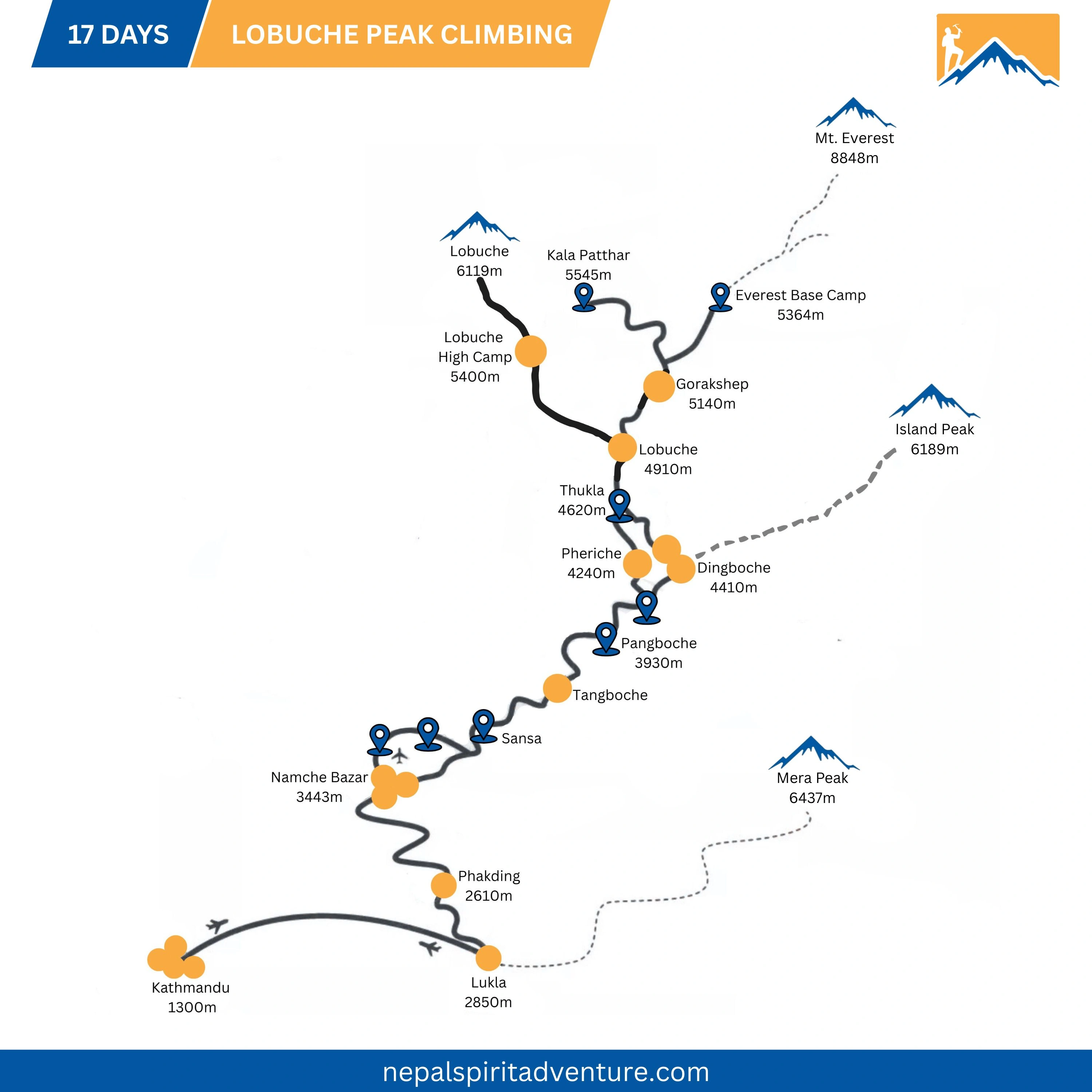
Previous trekking or climbing experience is a plus but not mandatory, as most trekking routes involve non-technical walking. The highest altitude you’ll reach is Kalapatthar (5,545m) and Lobuche Peak summit (6,119m).
Daily walking involves 5-6 hours of ups and downs through villages, farmlands, terraces, and riversides. Moderate fitness is required. Please consult your doctor before booking, especially if you have health concerns.
Our Experienced Trekking Crew
Nepal’s mountainous terrain requires you to be accompanied by experienced, qualified guides and porters for safety and trip success. Nepal Spirit Adventure employs native trekking guides and porters trained and certified by the Nepal Government, TAAN, and the Nepal Mountaineering Association.
Our guides have 9-10 years of experience, with ongoing training in medical aid and climbing techniques. They offer local cultural insights and assist in daily trip coordination. Group treks have one lead guide and an assistant per group size for safety and smooth operations.
Caring Porters
Our porters are well-equipped with warm gear and insured by our company. We adhere to the Porters Association International Act (PAC) standards and limit porter loads to 20-25 kg for their safety.
Travel and Trekking Insurance
Travel insurance is mandatory and must cover travel, medical emergencies, and rescue evacuation (including helicopter). It should also cover loss or theft of belongings and all planned activities, including trekking and climbing.
Nepalese insurance companies only provide policies for Nepalese nationals, so foreign visitors must bring their own insurance documents.
Nepal Spirit Adventure holds no responsibility for loss, theft, or damage to personal belongings.
Electricity and Electronic Items
Electricity (220-240 volts, 50 Hz) is available for charging batteries and devices. Plug adapters may be needed, which you can buy in Kathmandu. Both 3-pin and 2-pin plugs work. There may be a small fee for using recharging services.
High Altitude Sickness (AMS)
Altitude sickness can occur above 3,000m, with symptoms ranging from mild breathlessness to severe headaches, nausea, and loss of consciousness.
If you experience symptoms, inform your guide immediately. Avoid overexertion and dehydration by drinking at least 3-4 liters of water daily.
Group Size
Our tours can be booked with a minimum group size of 2 and a maximum of 10 or more upon request. Private trips for solo travelers are available with a single supplement.
You may also join fixed departure group trips or request a private date.
Best Seasons for Everest Base Camp Trek and Lobuche Peak Climb
Nepal offers four seasons for trekking: Spring, Summer, Autumn, and Winter. The most popular seasons are Spring and Autumn.
-
Autumn (September-November): Clear weather, spectacular mountain views, and cultural festivals like Dashain and Tihar.
-
Winter (December-February): Cold with snowfall at high elevations; ideal for lower altitude treks.
-
Spring (March-May): Mild weather, blooming rhododendrons, and excellent visibility.
-
Summer (June-August): Warm, wet monsoon season; trekking is less recommended except in dry rain-shadow areas like Upper Mustang and Dolpo. Fewer crowds and lush vegetation are advantages.